
Building Your Own Drills
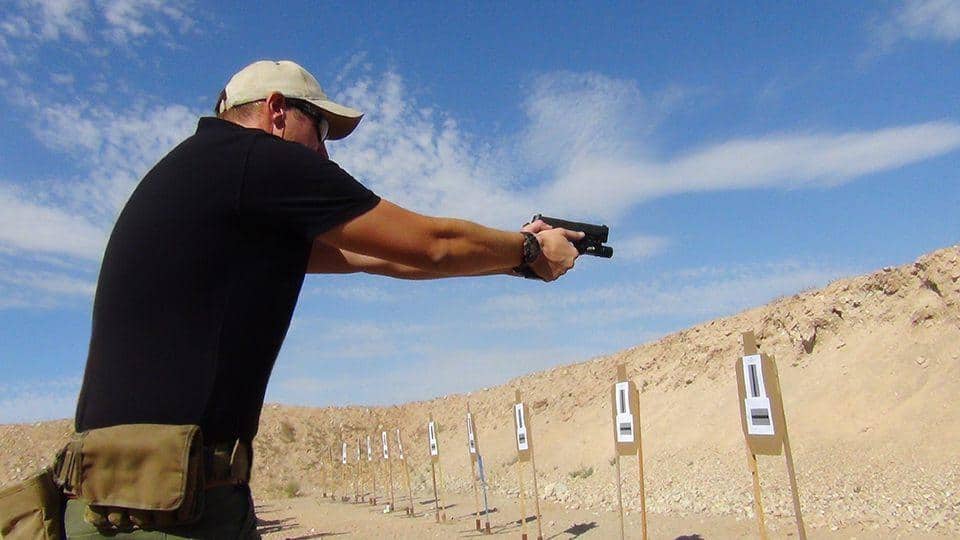
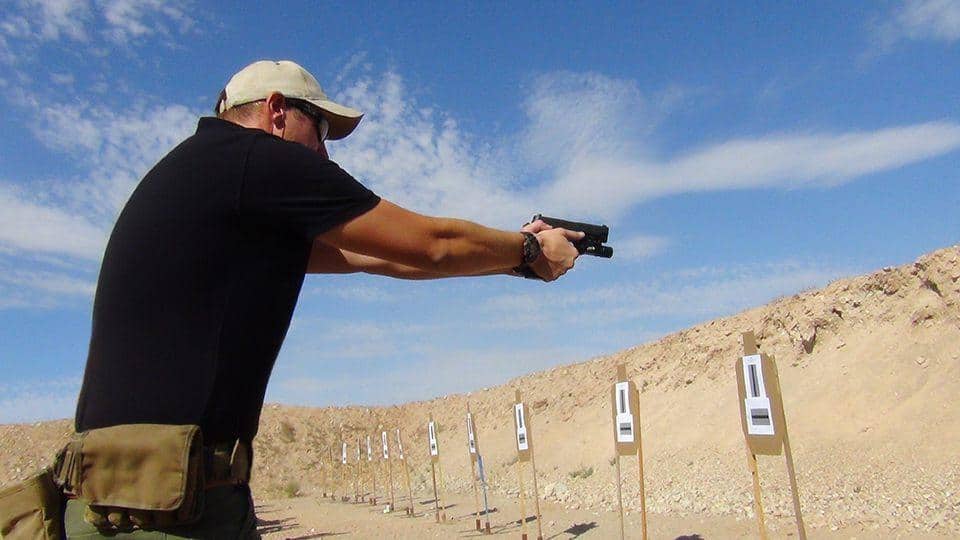
I get many questions every month on what drills will improve various shooting skills. Common questions include “What drills can I do for better trigger control?” and “What drill will help me get faster on my draw and first shot?” The list goes on and on.
There are the countless drills online that attempt to answer those questions. Unfortunately these drills are often shot with the end goal of speed and very little attention is given to technique or visual processing. While speed is important, effective training requires attention to more than just speed.
Below are several guidelines you can use to build an effective drill. Keep in mind when designing drills that simple drills work best to create a new level of understanding while complex drills are used to create skill sets, flow patterns, and immediate action patterns.
Guidelines for Effective Drills
- It is not the drill that does the teaching–it is what you are paying attention to during the drill. Without changing anything but your attentional focus, you can shoot a variety of drills on the exact same target and learn different kinesthetic or visual skills.
- Have one goal in mind when you create the drill and make that your learning objective. The conscious mind can only focus on one thing at a time. As an example, trigger control has several key elements. Pick one element of trigger control and focus your attention on it while you shoot the drill.
- Organize and shape the skill. I typically start with the end result in mind and work backwards from there. Whether I am working on a kinesthetic or visual processing skill, I picture what I want as the end result and then make myself pay attention to each step that leads to that result. By doing this, your mind puts things in proper sequence which leads to more consistent performance and higher levels of execution under pressure.
- Awareness of what you are doing as you are doing it is a major contributor to permanent improvement and retention of a skill. Dr. James Loehr, a sports psychologist, calls this “Level 1 Awareness.” You can develop this level of awareness by paying attention to everything your body is doing, from the way you grip the gun to how the soles of your feet contact the ground. As you become more aware and can process the finer details of what your body is actually doing, you can use this feedback to boost your shooting performance.
- Use variable and block training. Block training is doing the same thing over and over again. This type of training is useful when first learning a skill and to gain mastery over a particular skill. To improve overall learning and performance, use variable training. This type of training means that you subtly change the drill after every two to three repetitions. Variations could be include a different start position, a different target, or a different par time. Use your imagination.
- Challenge yourself constantly. Change up the drill as you gain mastery of it: increase the distance, decrease the time, make the target harder, shoot against an opponent, change the target order, or do it on the move. Use pressure as an ally and always look for ways to boost your performance.
- Integrate the skill into your overall performance. As soon as you feel rock solid with your skill, apply it as part of an overall sequence. This is where attention comes into play.
- Be patient with yourself. You did not get to where you are today overnight. You will not achieve miraculous improvement overnight either. Be patient and growth will happen. It is the consistent, disciplined approach to learning and performance that pays off with high levels of sustainable skill.
- Rotate to different skills every few days to build overall performance. Spending too much time on one skill leads to neglect in other skills.
- Keep a journal of your performance. If you want to really build skill on a long term basis, keep a written record of your progress. What was the goal? Drill type? Attention focus? These things matter if you are serious about training.
Think Outside the Box
Learn to use your imagination when creating training drills. By creating something that works specifically for what you want to improve, you will build a high definition training solution that works the way you want. It will also fire up your imagination in other areas and lead to higher levels of learning!
Ron Avery, co-founder
Tactical Performance Center
Recent Comments